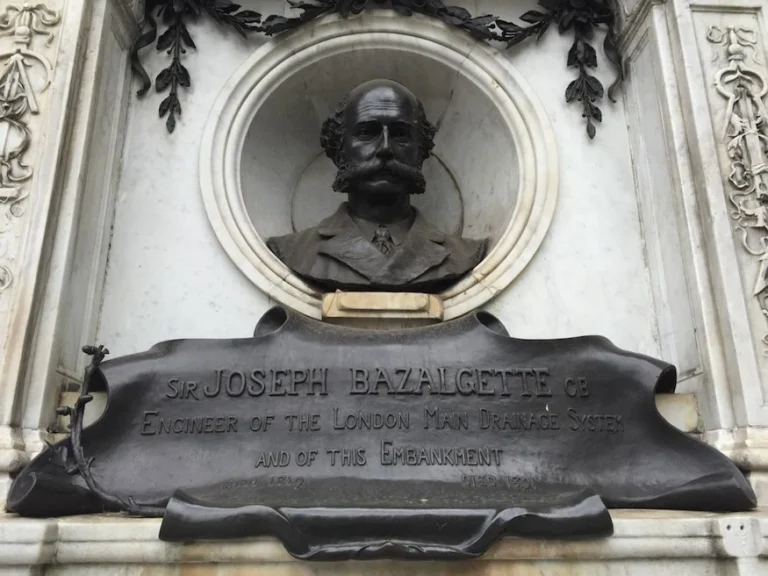


The man, the myth, the legend – without Joseph Bazalgette, there would be no Crossness Pumping Station! In fact, there would be no sewer system in London. This engineer was responsible for designing and building what we call now the Cathedral on the Marshes. So let’s get to know him a little bit better…
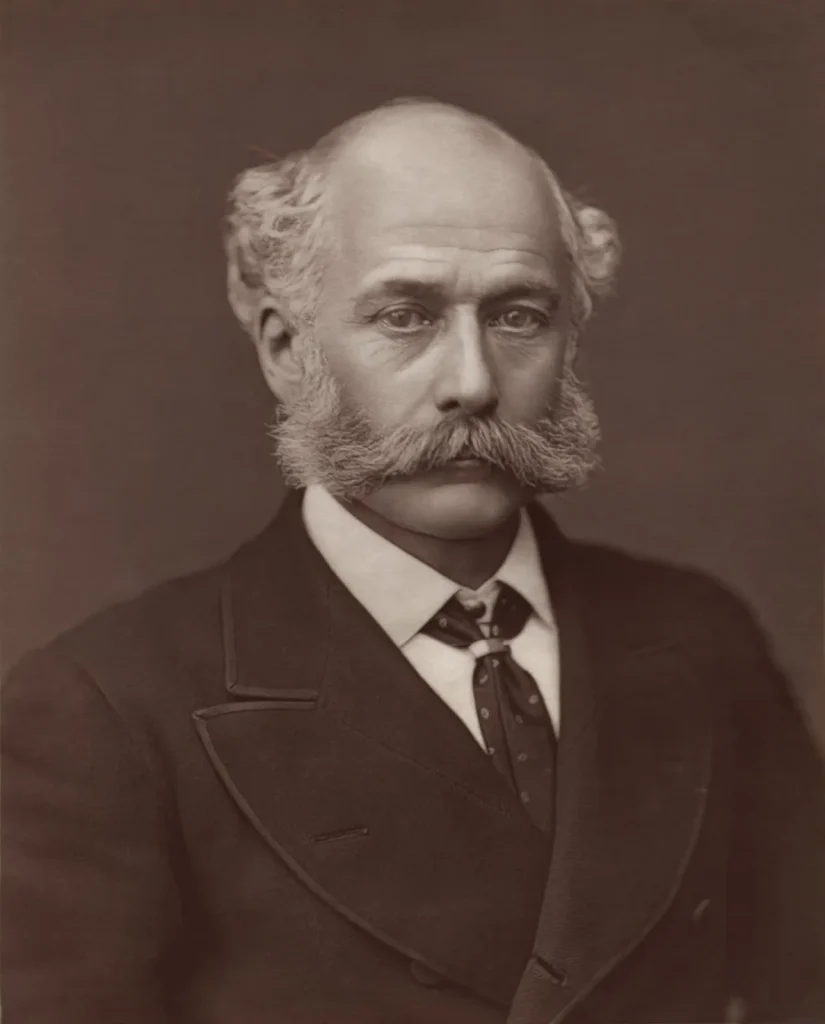
Born on 28th of March 1819, Joseph Bazalgette was the son of a Royal Navy captain. His grandfather, Louis Bazalgette, had emigrated from France and worked as the principal tailor to George IV. While Joseph was born in Enfield, as a child his family moved to St. John’s Wood in London.
Bazalgette spent his early career working on the developing railway system across England and also the canal system. He also spent some time working in Ireland and China, honing his engineering skills under the tutelage of civil engineer John MacNeil. In 1842, Joseph set off on his own at age 23, opening an engineering consulting firm in Great George Street, London. Around this time, he married Maria Kough – they would go on to have eleven children together.
By 1845, Bazalgette was a success, employing a large staff to work on railways, canals, and other civil engineering projects. But by 1847, it all proved to be too much as he suffered a nervous breakdown and retired to the countryside for a year.
But London was calling, and Bazalgette returned to the city to take on the role of assistant surveyor at the Metropolitan Commission of Sewers. In 1852, he took over the role of Engineer, after his predecessor died of ‘harrassing fatigues and anxieties’. By this time, the sewage situation in London had gotten out of hand – effluence was clogging the River Thames and cesspits were overflowing across the city. Plans had been drawn up to build underground sewage systems on each side of the river but no movement to complete the project was being made.
In 1856, the Metropolitan Board of Works was created. Eight different people applied for the role of Chief Engineer – it went to Joseph Bazalgette, thanks in part to testimonials from his close friends Isambard Kingdom Brunel and Robert Stephenson. He would retain this position until 1889.
Several cholera outbreaks had occurred in London, leading to the death of thousands. But it wouldn’t be until The Great Stink of the summer of 1858, that true progress began on constructing London’s sewage system. Parliament, plagued by the foul smell of the River Thames, passed the Enabling Act, allowing funding for the Metropolitan Board of Works to begin its mammoth project.
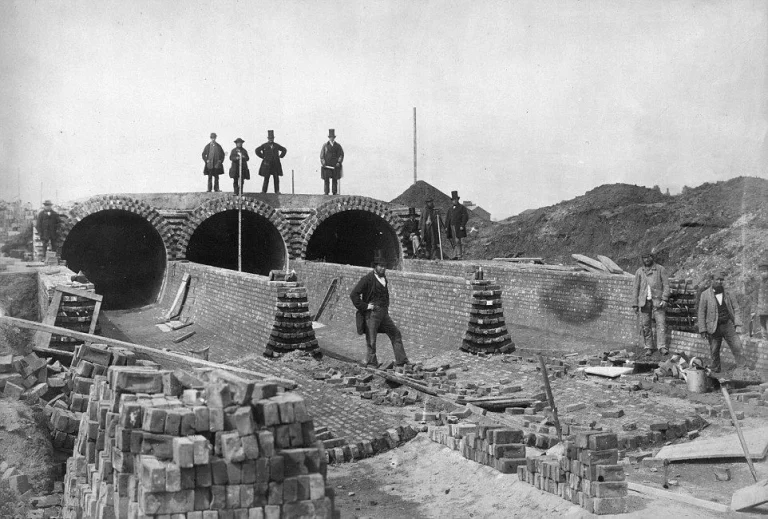
Bazalgette’s plan was to construct 82 miles of underground sewage tunnels and 1,100 miles of street sewers. The majority of which still makes up most on London’s present-day sewerage system.

The tunnels lead to two pumping stations – Abbey Mills in North London, and Crossness Pumping Station in Southeast London. Alongside the sewage tunnels and pumping stations, Bazalgette designed and created both the Chelsea, Victoria, and Albert Embankment.
But he wasn’t done just yet. In 1877, all of London’s bridges were taken into public ownership and made toll free. After surveying them all, Bazalgette found three not up to standards and took it upon himself to redesign them. These bridges still stand today – Battersea Bridge, Putney Bridge, and the Hammersmith suspension bridge. He submitted plans for the building of Tower Bridge, but sadly these were not selected.

He also took it upon himself to redesign, rebuild and build some of London’s most famous thoroughfares. These include Charing Cross Road, Shaftesbury Avenue (new build), Northumberland Avenue (new build), Southwark Street and Queen Victoria Street.
Joseph Bazalgette was notorious for his dedication and work ethic. Every connection to the sewage system by the various councils had to be checked and Bazalgette did it himself; thousands of records are covered in his handwritten notes.
In 1875, he was knighted by Queen Victoria for his services to engineering. After 33 years of serving as Chief Engineer of the Metropolitan Board of Works, he retired in 1889. Two years later, he died at his home in Wimbledon.